
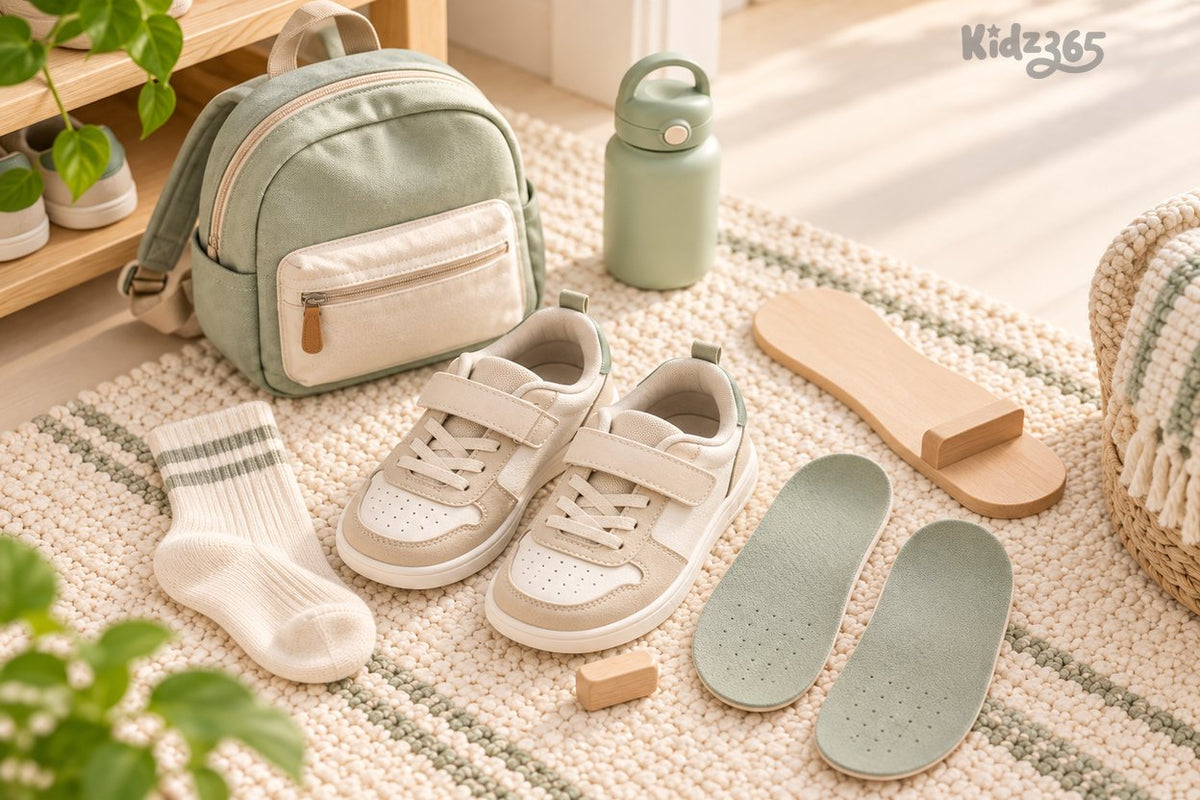
Kids can outgrow school shoes before the shoes look worn out. A quick fit check can catch the problem before a child starts compensating with curled toes, heel rubbing, or an awkward walk.
The quick answer: have your child stand in the shoes with their usual socks. There should be roughly 1.25 cm (about 1/2 inch, or a thumb’s width) between the longest toe and the front of the shoe, the heel should feel secure, and the toes should not feel squeezed. Then let your child walk around and tell you what feels different—not just whether the shoe “fits.”

The Kidz365 5-minute check: Stand · Feel · Walk · Recheck
1. Stand in the socks they actually wear
Feet spread a little when they carry body weight, so check shoes while your child is standing, not sitting. Use the socks they normally wear to school. If one foot is slightly larger, fit the larger foot.
2. Feel for toe room—without buying a boat
The Canadian Paediatric Society recommends about 1.25 cm, roughly a thumb’s width, between the longest toe and the end of the shoe while the child is standing. The American Academy of Pediatrics gives similar practical guidance for young children: about a finger-width of space in front of the big toe.
Growth room is useful; excessive empty space is not. A shoe that is much too long can slide, make the child grip with their toes, or feel clumsy during running and playground time.
3. Check the heel and the widest part of the foot
The heel should sit securely without painful rubbing. Across the front, the shoe should follow the foot without squeezing the toes together. If you see deep pressure marks after normal wear, the upper bulges sharply at the sides, or your child says the toes feel “squished,” it is worth rechecking the size or trying a different shape.

4. Walk, squat and wiggle
Have your child take a short walk, turn, squat, and wiggle their toes. Ask specific questions: “Does anything rub?” “Do your toes touch the front?” “Does your heel move up and down a lot?” A simple “Are they comfortable?” often gets an automatic yes.
5. Recheck both shoes, not just the size label
Children’s shoe sizing varies by brand and style. Treat the printed size as a starting point, not the verdict. If you are ordering online, measure both feet and compare the larger measurement with that brand’s current size chart.
Signs school shoes may be too small
- Toes reach the front when the child is standing.
- New red marks, blisters, rubbing, or pressure spots appear after ordinary wear.
- The child suddenly avoids a pair they used to choose.
- Putting the shoes on has become unusually difficult.
- Toes look crowded or the upper is visibly stretched across the forefoot.
- The child reports foot pain during or after school.
How often should you check?
Young children’s feet can grow quickly. The AAP recommends checking shoe fit about monthly during the active-toddler stage. For older children, there is no need to turn it into a calendar obsession, but a quick recheck after a growth spurt, a complaint, a new blister, or a noticeable change in how the shoe goes on is sensible.
Back-to-school season is also a good time to repeat the check a few weeks after classes begin. Shoes that felt fine during one store visit may feel very different after full school days, recess, sports, and thicker socks.
One useful school-gear habit
When you do the shoe check, take two extra minutes to check the rest of the daily setup. Make sure the backpack still fits comfortably, and if shoes or spare clothing go to school or daycare, label the items that are most likely to wander.
A note on foot health: this article is general footwear guidance, not medical advice. If your child has persistent foot pain, limping, numbness, recurrent blisters, or a walking pattern that concerns you, talk with a pediatrician or another qualified health professional.
Helpful guidance: Canadian Paediatric Society — Footwear for children · American Academy of Pediatrics — Shoes for Active Toddlers
Image credits
Photo 1: Kamaji Ogino / Pexels — Pexels License, free to use, including commercial use. Photo 2: Oleskandra Biliak / Pexels — Pexels License, free to use, including commercial use. Pexels License.


