
A head-lice notice from school can make an ordinary evening feel urgent. The first thing to know: a classroom notice does not mean your child has lice. Head lice are common in school-age children, are not a sign of poor hygiene, and do not spread disease.
Quick answer: Tonight, use a simple Check · Confirm · Treat · Tell plan. Look carefully for live crawling lice, avoid treating “just in case,” use an age-appropriate product exactly as directed if lice are confirmed, and follow your school’s communication policy without turning your home upside down.
1. Check: look where lice are easiest to miss
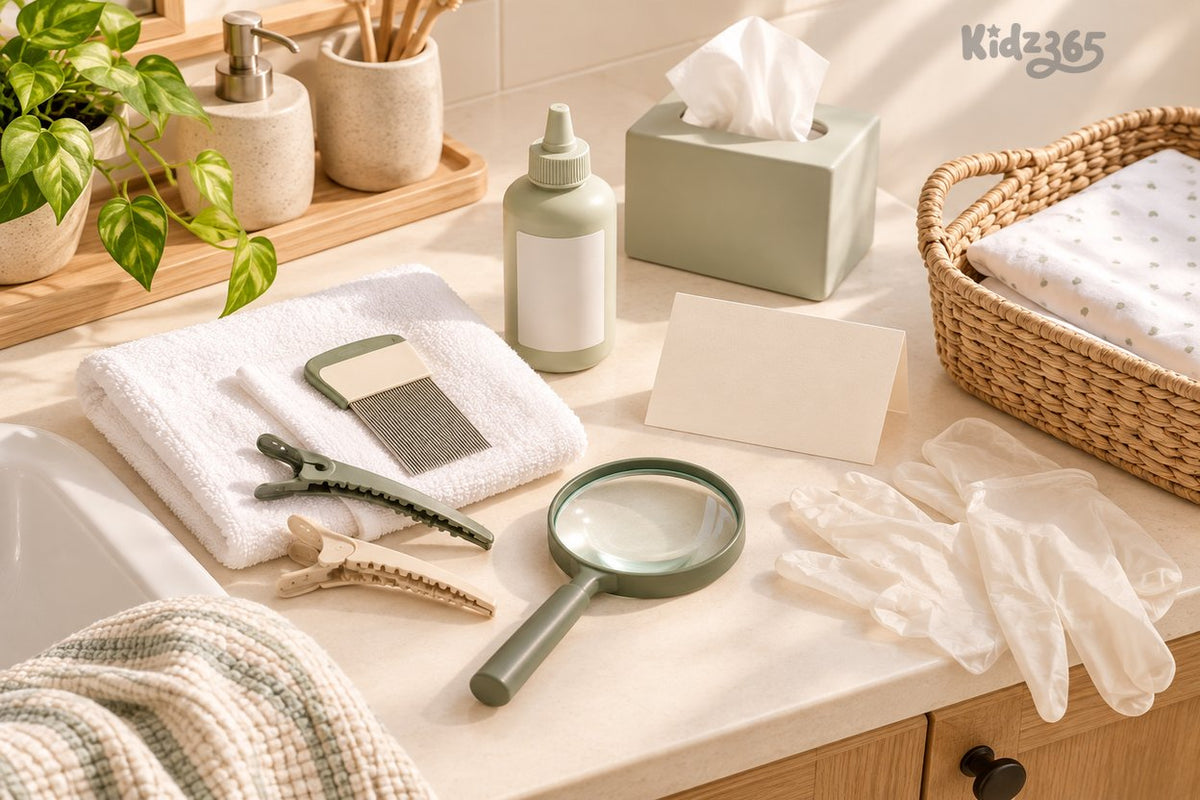
Seat your child in bright light and part the hair in small sections. Pay special attention behind the ears and at the nape of the neck. A fine-tooth lice comb can make checking easier. The clearest sign is a live crawling louse; nits alone can be difficult to distinguish from dandruff or other hair debris.

2. Confirm before you treat
Do not automatically medicate a child because another student has lice. If you are not sure what you are seeing, ask your pediatrician, pharmacist, school nurse, or another qualified health professional to help confirm it. The American Academy of Pediatrics advises using lice medicine only when you are sure living lice are present.
3. Treat safely if lice are confirmed
Use an age-appropriate over-the-counter or prescription treatment recommended for your child and follow the label exactly. Different products have different instructions and repeat-treatment schedules. Fine-tooth combing can also help remove lice and nits when used as directed.
Skip internet “hacks.” Pediatric guidance does not support remedies such as mayonnaise or olive oil as proven treatments. Never use gasoline, kerosene, household insecticides, or other toxic substances on a child’s hair or scalp.

4. Tell and check the right people
Check household members and other close contacts, especially anyone who has had repeated head-to-head contact. Do not automatically treat everyone who lives in the home. If lice are confirmed, tell the school or child-care program as its policy requests so other families can watch for symptoms without singling anyone out.
For prevention, focus on the behavior that matters most: reduce direct hair-to-hair contact and avoid sharing combs, brushes, hats, hair accessories, towels, or similar items.
Do you need to deep-clean the whole house?
No. Head lice survive poorly away from the scalp, so a whole-house disinfecting marathon is unnecessary. Concentrate on recently used pillowcases, bedding, hats, towels, combs, and brushes, following treatment-product and public-health instructions. Do not spray furniture or rooms with insecticides.
Can your child go back to school?
In the United States, the CDC says a child with head lice does not need to be sent home early and can return after appropriate treatment has started. The CDC and AAP do not recommend “no-nit” exclusion policies. Always follow your own school, daycare, and local public-health rules, which can differ.
For fever, vomiting, respiratory symptoms, or other illness-related attendance questions, see our school and daycare sick-day guide.
Two quick myths parents can drop
Can lice jump or fly? No. Head lice crawl; close hair-to-hair contact is the main way they spread.
Does lice mean a child is dirty? No. Anyone can get head lice, and stigma makes a manageable problem harder for families and schools.
When to call a health professional
Get professional advice if you cannot confirm what you are seeing, your child is very young, the scalp is raw or looks infected, you are unsure whether a treatment is appropriate because of age or medical history, someone in the household is pregnant, or live lice remain after treatment was used correctly.
This article is general educational information, not medical diagnosis or treatment advice. For a suspected infestation or questions about a treatment product, contact your child’s pediatrician, pharmacist, or other qualified health professional and follow local school/public-health guidance.
Helpful sources
CDC: Providing Care for Individuals with Head Lice
CDC: About Head Lice
HealthyChildren.org / American Academy of Pediatrics: Head Lice
Image credits
Photo 1: Nicola Barts, Pexels — source page. Pexels License: free for commercial use; attribution not required, provided here for transparency.
Photo 2: Artem Podrez, Pexels — source page. Pexels License: free for commercial use; attribution not required, provided here for transparency.


