Short answer: Stop swaddling as soon as your baby shows signs of trying to roll over. You do not need to wait for a complete first roll. The American Academy of Pediatrics (AAP) says rolling can begin earlier than many parents expect, and a swaddled baby who reaches the stomach has a higher suffocation risk.
If this milestone showed up tonight, keep the transition simple. At Kidz365, think: Unwrap · Free · Back · Repeat.
The rule that matters most
Once your baby is trying to roll, stop any swaddle that restricts the arms, chest or body. Do not keep using a tight swaddle because your baby “isn’t rolling every time yet,” and do not switch to a weighted swaddle. The AAP specifically advises against weighted swaddles and weighted sleep products.

The Kidz365 Unwrap · Free · Back · Repeat transition
1. Unwrap
At the first clear signs of rolling attempts, retire the swaddle for sleep. A gradual “one arm out” transition is not the right strategy once rolling attempts have begun, because the goal now is to let your baby use both arms freely.
2. Free the arms and body
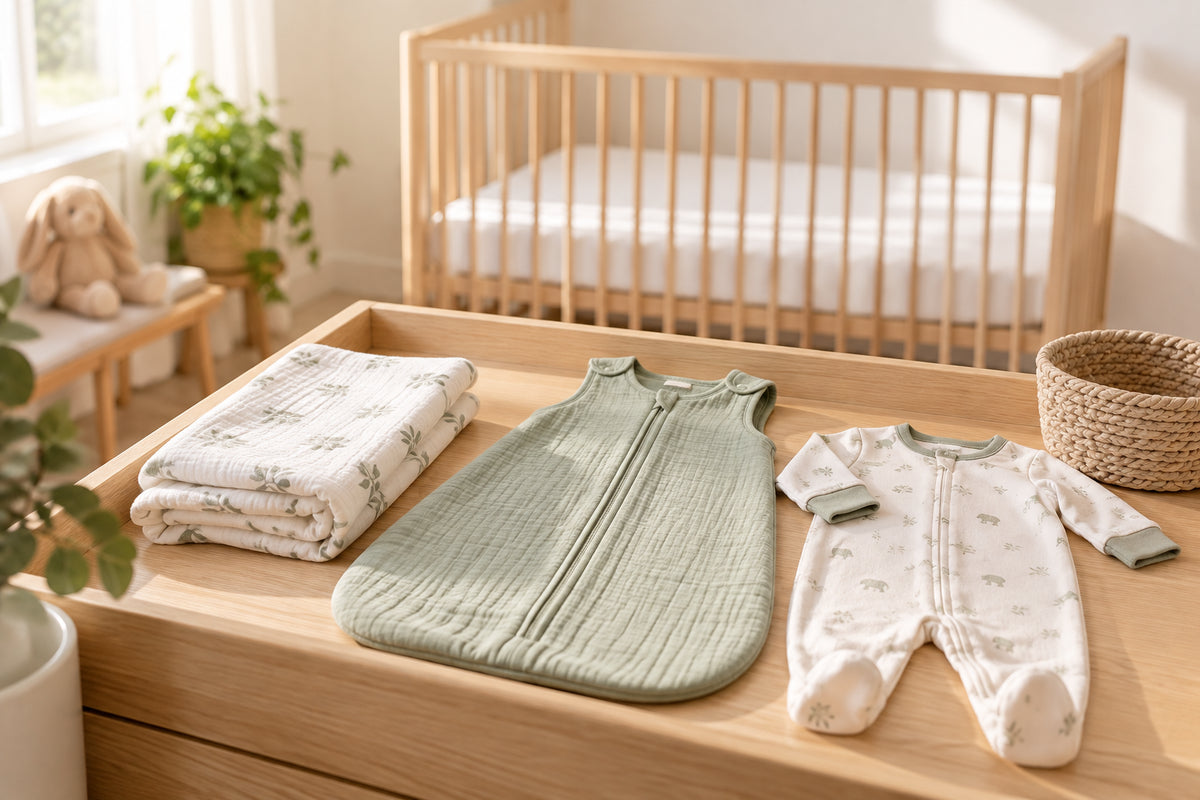
Choose simple, fitted sleepwear. If you use a sleep sack, choose an unweighted, correctly sized, arms-free design that does not compress the arms, chest or body. Check the manufacturer’s size guidance so the neckline and arm openings fit properly and your baby cannot slide down inside it.
3. Back for every sleep
Continue placing your baby on their back for every nap and nighttime sleep, on a firm, flat sleep surface with a fitted sheet. Keep loose blankets, pillows, bumpers, toys and positioners out of the sleep space.
4. Repeat the familiar routine
The clothing can change without changing everything else. Keep the same short wind-down cues—feed, diaper, dim lights, quiet song, cuddle, then into the sleep space. Familiarity can make the transition feel less abrupt even though the swaddle itself needs to stop.
What counts as “trying to roll”?
You do not need to diagnose a specific movement pattern. If your baby is clearly working from the back toward the side or tummy, twisting the shoulders and hips to turn, or repeatedly getting onto the side as part of a roll attempt, treat that as a signal to stop swaddling. Development varies, so use the milestone rather than waiting for a particular birthday.
The AAP notes that some babies begin working on rolling as early as about 2 months. Health Canada takes an even more conservative age-based approach and advises stopping swaddling around 2 months, before a baby can roll over.

What should replace the swaddle?
You do not need a special “transition” gadget. Fitted pajamas can be enough. An appropriately sized, non-weighted sleep sack that leaves the arms free is another option. What matters is that the replacement does not restrain the baby’s arms or body and does not add loose bedding to the crib.
For changing room temperatures, our related guide Footed vs. Footless Baby Sleepers explains how to think about fit and layers without over-bundling.
Three things not to add during the transition
- No weighted swaddles, sleep sacks or blankets.
- No loose blanket to “make up” for the missing swaddle. Use suitable sleepwear instead.
- No wedges, rolled towels or sleep positioners to keep your baby on their back.
What if your baby rolls after you put them down?
Keep placing your baby on their back at the start of every sleep. Once a baby can roll independently, safe-sleep guidance changes slightly by developmental stage and jurisdiction. Do not use a swaddle or positioning device to prevent rolling. If you are unsure what applies to your baby—especially if they were born prematurely or have a medical condition—ask your pediatrician or another qualified health professional.
A simple plan for tonight
Stop the swaddle, free both arms, use fitted non-weighted sleepwear, place your baby on their back on a firm flat surface, and keep the rest of the bedtime routine familiar. The first few nights may feel different; the safety change should not be delayed while waiting for the transition to feel perfect.
Health note: This article provides general parenting information, not individualized medical advice. Ask your baby’s pediatrician or qualified health professional if you have questions about prematurity, hip development, breathing, reflux, unusual movements, sleep products or your baby’s specific safe-sleep needs.
Helpful sources
- HealthyChildren.org / American Academy of Pediatrics: Swaddling—Is it Safe?
- HealthyChildren.org / AAP: How to Keep Your Sleeping Baby Safe
- Government of Canada: Dressing Your Baby for Sleep
Image credits
Photo 1: Adele Morris, Pexels — source page. Pexels License; free to use, including commercial website use; attribution not required.
Photo 2: Helena Lopes, Pexels — source page. Pexels License; free to use, including commercial website use; attribution not required.