
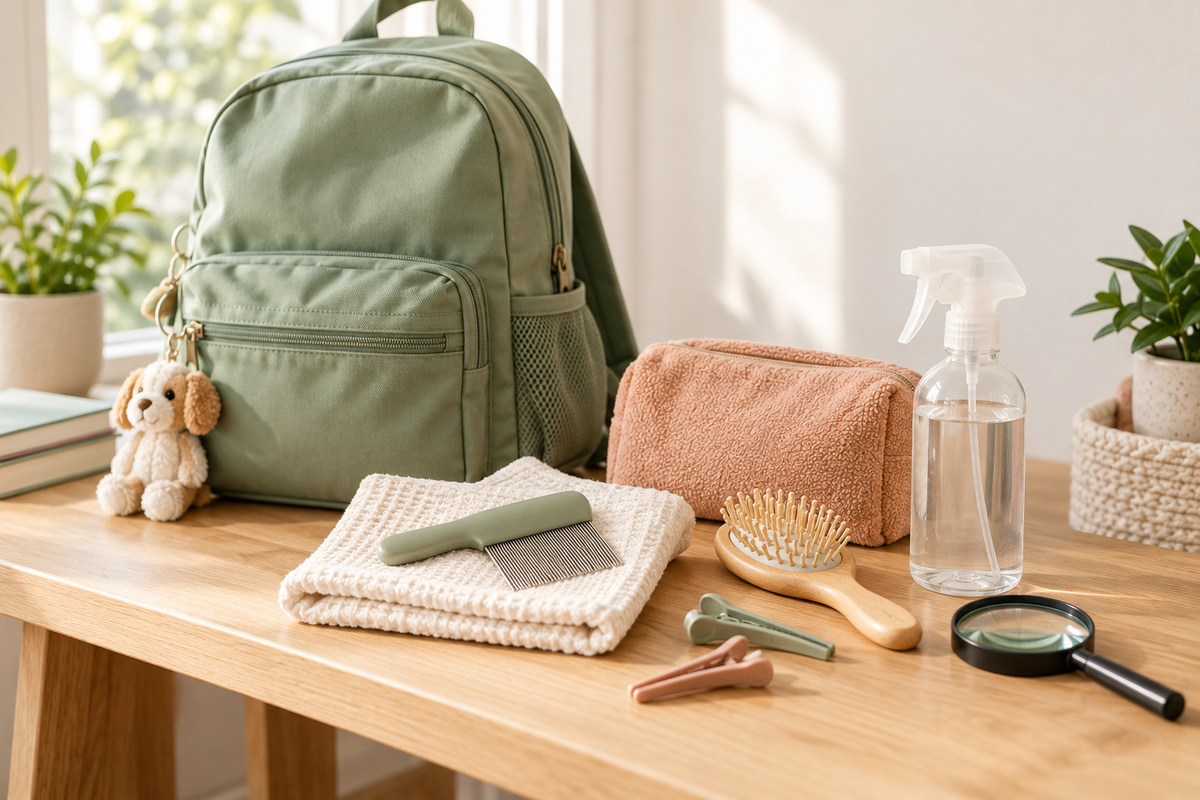
A school lice notice can make any parent want to start washing everything in sight. But a notice is a reason to check, not proof your child has head lice. Head lice are common in school-age children, are not a sign of poor hygiene, and do not spread disease. They crawl; they do not jump or fly.
Before you buy treatments or deep-clean the house, try this calm 15-minute check.

The 15-minute Kidz365 head-check
1. Check in bright light
Seat your child somewhere comfortable and work in small sections. Look closely at the scalp, especially behind the ears and at the nape of the neck. A fine-tooth lice comb can help. Live lice move quickly and can be hard to spot; nits are attached firmly to the hair shaft and are often confused with dandruff or other debris.
2. Confirm before treating
Finding a live crawling louse is the clearest sign of an active infestation. Nits alone do not always mean lice are active, particularly when they are farther from the scalp. If you are unsure what you are seeing, ask your pediatrician, pharmacist, school nurse, or another qualified health professional before treating.
3. If you find live lice, follow the treatment directions exactly
Use an age-appropriate over-the-counter or prescription treatment recommended for your child and follow its label or professional instructions carefully. Do not combine lice medicines, use extra doses “to be safe,” or rely on hazardous home remedies. The CDC advises talking with a healthcare professional before treating young children and if you think re-treatment may be needed.

4. Skip the whole-house panic clean
You do not need to fumigate your home. Focus on a few items that recently touched the child’s head—such as combs, brushes, hats, pillowcases, towels, or bedding—and follow the treatment or public-health instructions that apply where you live. Vacuuming areas where your child rested is reasonable; pesticide sprays and foggers are not.
5. Make a school plan, not a shame plan
Tell the school or school nurse when appropriate so they can follow local procedures. In the United States, CDC guidance says a child with head lice does not need to be sent home early and may return after appropriate treatment has started. The American Academy of Pediatrics also discourages “no-nit” policies that keep otherwise well children out of class.
Three things worth telling your child
- “This is common.” Lice can happen in any family.
- “You did nothing wrong.” It is not about being clean or dirty.
- “For now, keep hair-to-hair contact and shared hats, brushes, and hair accessories to a minimum.”
When to get professional help
Contact your child’s pediatrician, pharmacist, or other qualified health professional if you cannot tell whether it is lice, your child is very young, the scalp is badly irritated or looks infected, you have questions about which treatment is appropriate, or live lice remain after you have correctly followed the treatment directions.
Quick FAQ
Can head lice jump or fly?
No. They crawl and spread mainly through close head-to-head contact.
Does every nit mean an active infestation?
No. Nits can remain after lice are gone, and other particles are often mistaken for nits. Finding a live louse is the best confirmation.
Should I treat everyone in the house automatically?
Check close household members and treat people who meet the criteria for active infestation according to professional or product guidance rather than treating everyone “just in case.”
This article is general educational information, not medical advice or a diagnosis. Treatment choices and school policies can vary. Ask a qualified healthcare professional for advice specific to your child.
Helpful references
- CDC: Providing Care for Individuals with Head Lice
- CDC: Treatment of Head Lice
- HealthyChildren.org (AAP): Head Lice—What Parents Need to Know
Image credits
Image 1: Nicola Barts / Pexels — source page — Pexels License, free for commercial website/blog use. Image 2: Pavel Danilyuk / Pexels — source page — Pexels License. Attribution is not required by the license; credits are included for transparency.


