
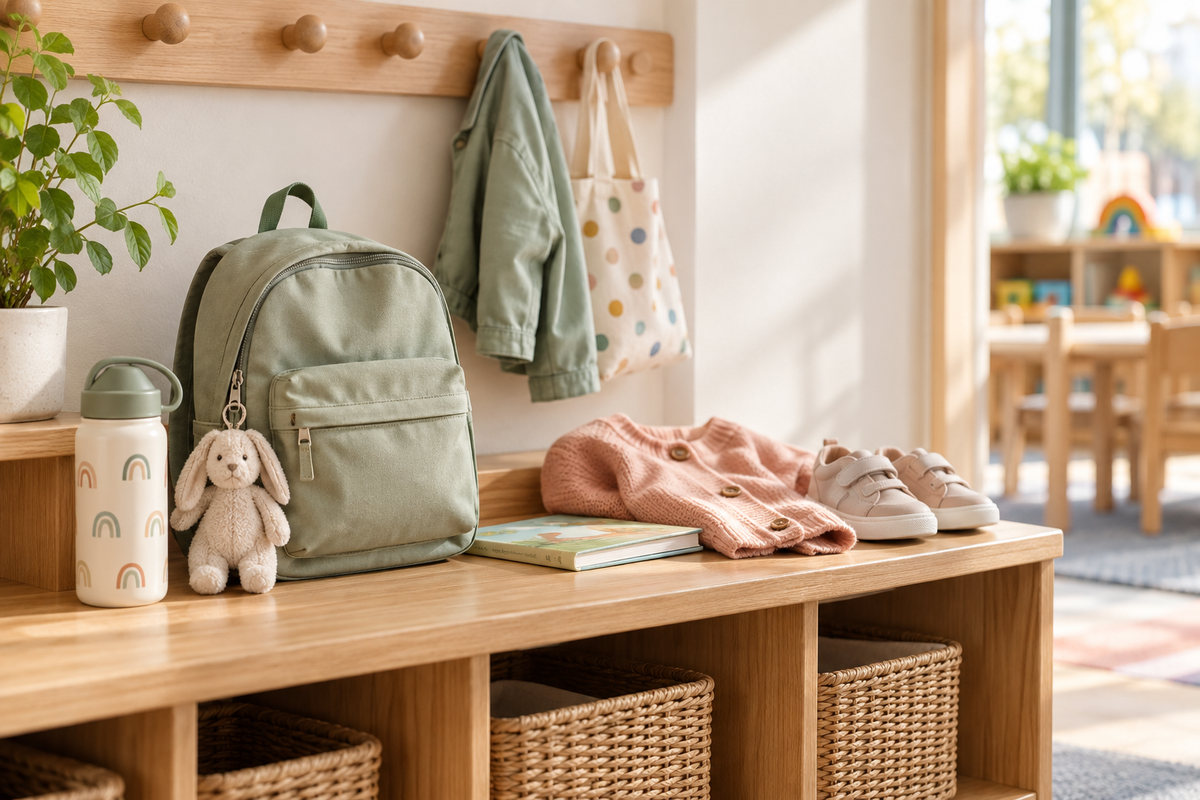
Daycare or preschool drop-off can get harder even after a child seemed fine at first. The novelty wears off, your child understands the separation more clearly, or a new room, teacher, schedule or break resets the transition. Tears at the door do not automatically mean the day will go badly.
Quick answer: keep the goodbye warm, short and predictable
A repeatable goodbye helps a young child know what happens next. The American Academy of Pediatrics recommends quick goodbye rituals, consistency and returning when you said you would. ZERO TO THREE also advises against sneaking away because it can make a child more watchful about when you might disappear again.

The Kidz365 5-minute goodbye routine
1. Connect — about 60 seconds
Give your child your full attention before the handoff. A hug, high-five or simple line such as “You wish I could stay. I’ll be back after your nap” acknowledges the feeling without turning the doorway into a long negotiation.
2. Preview — about 60 seconds
Use the same simple sequence each morning: “Backpack on the hook, then blocks, then snack, and I come back after rest time.” Young children often understand familiar events better than clock times.
3. Hand off — about 60–90 seconds
Let the educator or caregiver take over with a known activity, friend or comfort item if the program allows one. If drop-off has been especially difficult, agree on the handoff plan with the childcare team before arriving so everyone uses the same approach.

4. Say goodbye — about 30 seconds
Use one recognizable ritual: one hug, one phrase and one wave. Then leave. Avoid slipping out while your child is distracted, and avoid returning for repeated “one more” goodbyes unless the childcare team asks you to come back.
5. Go calmly
Your child may still cry. The goal is not a tear-free doorway; it is a predictable separation followed by support from another trusted adult. If your program sends updates, agree on when you will check in rather than watching the door or repeatedly calling during the transition.
Make tomorrow easier tonight
Pack the bag, choose clothes and decide on the goodbye phrase ahead of time. Practice the ritual with a stuffed toy on a weekend. If your child has been away from care for a while or has moved rooms, expect that the routine may need a short reset.
When should parents ask for more help?
Ask the educator what happens after you leave: Does your child settle, accept comfort and begin playing, or stay intensely distressed for much of the day? Short-lived upset at separation can be developmentally typical. If distress is persistent, escalating, or begins to interfere with eating, sleep, play or everyday functioning, talk with your child’s pediatrician or another qualified child-health professional and coordinate with the childcare team.
Care note: This article offers general parenting information and is not a diagnosis or a substitute for individualized medical or developmental advice.
Sources & further reading
- American Academy of Pediatrics / HealthyChildren.org — How to Ease Your Child’s Separation Anxiety
- ZERO TO THREE — Separation Anxiety
- Ontario — How to prepare your child for child care
Image credits
Image 1: Icsilviu, Pixabay — source page — Pixabay Content License. Image 2: ambermb, Pixabay — source page — Pixabay Content License. Pixabay allows use without required attribution, subject to its license terms; credit is included here for transparency.


